Few things make a driver's stomach drop like seeing the check engine light come on. Is it something small, or is your car about to break down? The truth is that a check engine light can mean many different things. It might be as simple as a loose gas cap, or it might point to a real engine, sensor, or emissions problem. That's exactly why the light exists, since your car's computer noticed something outside normal range and wants it looked at. The tricky part is that the light alone doesn't tell you how serious the issue is. Ignoring it can turn a cheap fix into an expensive repair, but panicking isn't the answer either. In this guide, we'll explain the most common reasons your check engine light comes on, the difference between a solid and a flashing light, and why computer diagnostics are the fastest way to find the real cause. If your light is on, here's what you need to know before your next drive around Rhode Island.
Common Reasons Your Check Engine Light Comes On
Your check engine light can trigger for dozens of reasons, but a few are far more common than others. A loose or cracked gas cap is one of the simplest, since it lets fuel vapors escape and trips the sensor. A failing oxygen sensor is another frequent cause, and it affects your fuel economy if left alone. Worn spark plugs or ignition coils can cause the light along with rough running or misfires. A bad catalytic converter is more serious and more expensive, and it often follows other ignored problems. Mass airflow sensor issues round out the usual list. The point is simple: the same light covers cheap fixes and costly ones, so you can't judge the problem by the light alone. That's where diagnostics come in.
Solid Light vs. Flashing Light
Not all check engine lights mean the same thing, and the difference is important. A steady, solid light usually means the problem isn't an emergency, but it does need attention soon. You can typically keep driving carefully and schedule a diagnostic. A flashing check engine light is a different story. It usually signals a serious misfire that's dumping raw fuel into your exhaust, which can quickly damage your catalytic converter, an expensive part. If your light is flashing, you should stop driving hard, reduce speed, and get to a shop as soon as possible. When in doubt, treat a flashing light as urgent and a solid light as a strong reminder. Either way, reading the trouble codes is the only way to know for sure what your car is telling you.
Why You Shouldn't Ignore It
It's tempting to ignore a check engine light when your car still seems to run fine. That's a gamble that often backfires. Many problems that trigger the light get worse and more expensive the longer they wait. A failing oxygen sensor slowly wastes fuel and can lead to a ruined catalytic converter. A small misfire can turn into engine damage. The light can also hide a problem that will cause you to fail a state inspection, leaving you stuck at renewal time. Beyond the repair bill, an ignored issue can leave you stranded when you least expect it. The smart move is to find out what the light means early, while the fix is usually smaller. Knowing the cause puts you back in control instead of guessing every time you start the car.
How Computer Diagnostics Find the Problem
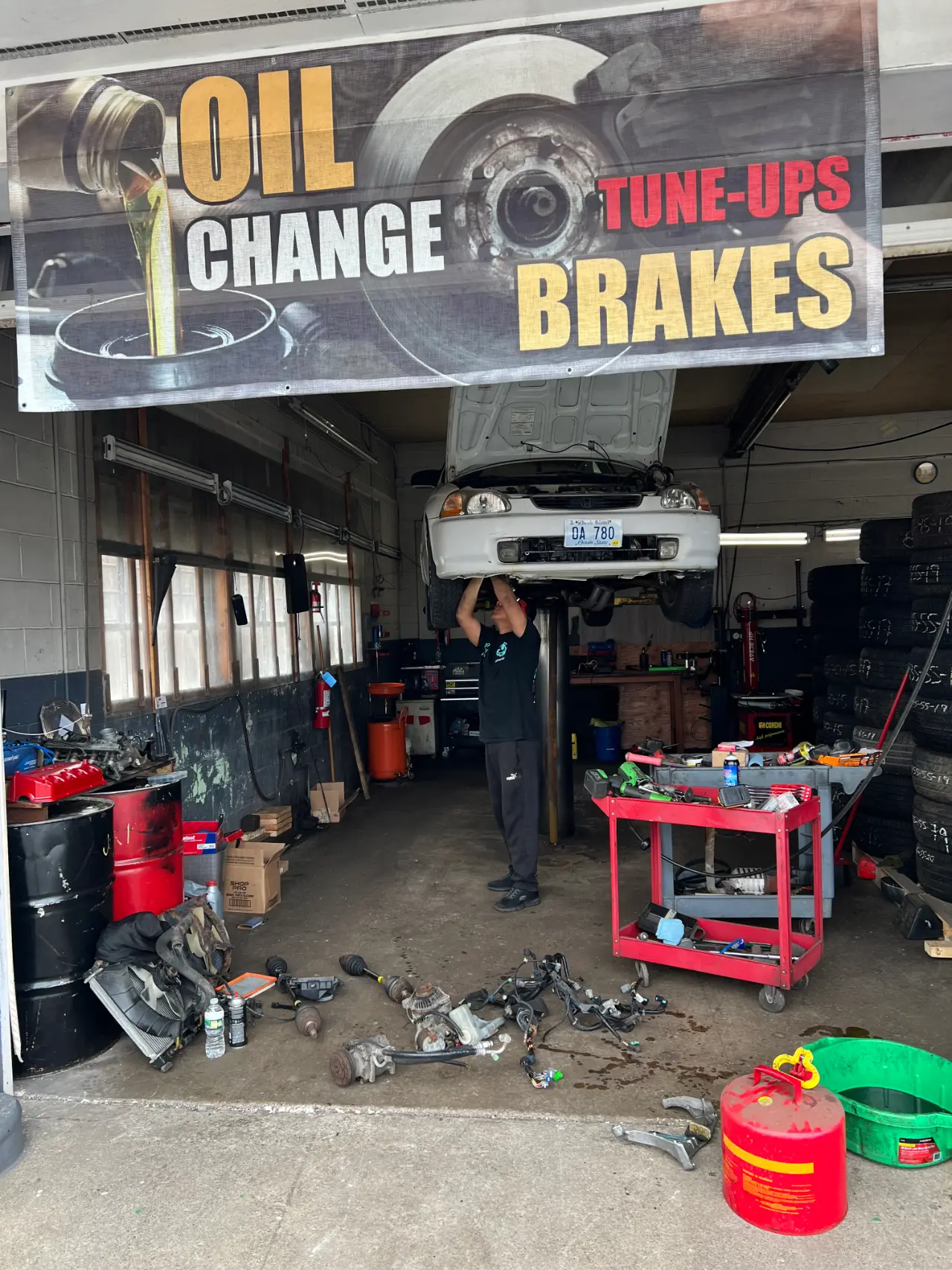
The fastest way to solve a check engine light is with computer diagnostics. Your car stores trouble codes when something goes wrong, and a diagnostic scanner reads those codes directly from the vehicle's computer. This tells a technician which system flagged the issue, whether it's the engine, emissions, sensors, or electrical. From there, we test the specific parts involved to confirm the real cause instead of replacing parts by guesswork. That saves you money and avoids repeat visits. At our Warren shop, we run computer diagnostics, explain the results in plain language, and give you an honest recommendation before any repair is approved. If your check engine light is on, a proper scan turns a stressful mystery into a clear, fixable answer.